

How an at-fault accident affects your car insurance rates in Ontario
By Dave De Vries · Updated 2026-07-02

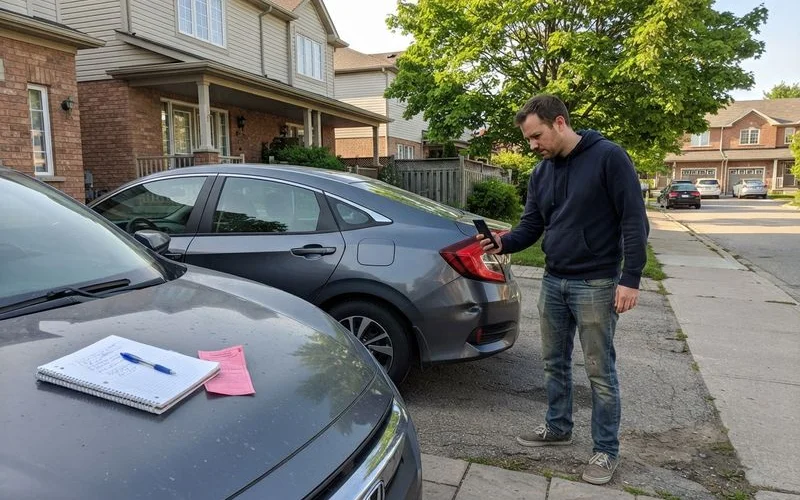
An at-fault accident is one of the fastest ways an Ontario driver’s premium changes, and the size of that change surprises a lot of people who assumed one claim wouldn’t move the number much. Understanding how insurers actually treat an at-fault claim makes the increase easier to plan for, and shows where you still have some control over the outcome.
Why one accident moves the price
Insurers price a policy based on the likelihood of a future claim, and a recent at-fault accident is one of the strongest signals they use. It doesn’t just reflect the cost of that one claim, it shifts how the insurer views your overall risk going forward, which is why the increase can feel disproportionate to the size of the original claim.
What typically happens after a claim
- The claim is reported and processed through your insurer, who determines fault based on the circumstances.
- Your file is updated to reflect the at-fault claim, which becomes part of your driving record with that insurer and, in many cases, is visible to other insurers through shared industry databases.
- Your premium adjusts, either at your next renewal or sooner depending on your insurer’s policies, reflecting the higher assessed risk.
- The impact gradually fades over time as the accident moves further into the past, assuming no further claims occur.
What influences the size of the increase
| Factor | Effect on the increase |
|---|---|
| Severity and cost of the claim | Larger claims typically produce a bigger rate increase |
| Your prior driving record | A long clean record before the accident can soften the impact |
| Accident forgiveness on your policy | Can prevent an increase for a qualifying first at-fault claim |
| Your insurer’s specific rating rules | Insurers weigh at-fault accidents differently from one another |
Accident forgiveness, and why it’s worth checking
Some auto insurance policies include accident forgiveness, either automatically after a set number of claims-free years or as an optional add-on, which protects your rate from increasing after a first at-fault claim. If you’re not sure whether your policy includes it, it’s worth asking your broker before you need it, since it typically has to be part of the policy in advance rather than something you can add retroactively after a claim.
Managing the increase
A few practical steps help limit the damage after an at-fault claim:
- Ask your current insurer directly how the specific claim is affecting your renewal price, and whether any protections on your policy apply.
- Get comparison quotes, since insurers don’t all weigh a single at-fault accident the same way, and a broker can identify which companies tend to be more forgiving of one incident on an otherwise clean record. If those quotes convince you to leave your current insurer, our guide on switching car insurance providers in Ontario covers how to do it without a coverage gap.
- Avoid a second claim in the meantime. A second at-fault claim within a short window compounds the impact significantly more than the first one did alone.
- Consider a higher deductible going forward if cash flow allows, which can offset some of the premium increase.
Not-at-fault versus at-fault: why the distinction matters
Not every accident affects your rate the same way. If a collision is determined to be entirely the other driver’s fault, and their insurer accepts liability, your own rate often isn’t affected at all, since the claim doesn’t reflect on your driving. Partial fault situations sit in between, and how they’re split, and priced, depends on the specific circumstances and your insurer’s rules. If you’re ever unsure whether a claim was recorded as at-fault, not-at-fault, or split, ask your insurer directly, since that classification is what actually drives the rate impact, not just the fact that a claim occurred.
It’s also worth asking for that classification in writing once a claim is closed, so you have a clear record if you later shop for quotes elsewhere and a new insurer asks about your claims history. A written confirmation of a not-at-fault determination can occasionally help when a new insurer’s system doesn’t automatically reflect the shared industry record.
If your rate increase pushes you into non-standard coverage
For drivers with multiple recent claims or a more serious violation, standard insurers sometimes decline to renew or offer a much higher rate, which can mean moving to a specialized high-risk or non-standard auto insurance program instead. If that’s the situation you’re facing, a broker experienced with non-standard placements can walk you through what coverage is still available and what it costs to get back to a standard policy over time.
For more on how providers in this directory are evaluated, see our ranking methodology, or return to the homepage to browse coverage options across the Toronto area.
FAQ
- How long does an at-fault accident stay on my insurance record in Ontario?
- Most insurers look back several years, often around six, when pricing a policy, though the exact window varies by company. The impact on your rate typically fades gradually rather than dropping off all at once.
- Will my rate go up even for a minor at-fault accident?
- Usually yes, though the size of the increase depends on the claim amount and how your insurer classifies it. Some policies include accident forgiveness for a first at-fault claim, which can prevent an increase if you qualify.
- Should I pay for minor damage myself instead of filing a claim?
- It can make sense for very minor damage where the repair cost is close to your deductible, since a small claim can still affect your rate. Weigh the repair cost against the likely premium impact, and ask your broker how your specific insurer treats small claims before deciding.
- Can I switch insurers after an at-fault accident to get a better rate?
- You can shop around, but expect most insurers to price the accident into any new quote as well, since it's part of your driving record. A broker can help identify which insurers tend to weigh a single at-fault accident less heavily than others.
Related on this site
- Browse auto insurance providers
- Best auto insurance in Toronto, Ontario →
- What car insurance costs in Ontario and what changes your rate
- Is car insurance mandatory in Ontario? What the law requires
- How to switch car insurance providers in Ontario without a coverage gap
- Car insurance for new drivers and newcomers to Ontario
- All guides →